We spend a lot of time helping Jacksonville homeowners protect the house itself — roof age, wind mitigation credits, flood zones, replacement cost. Those conversations matter. But there is a harder question that a homeowners policy was never designed to answer:
If something happened to you tomorrow, could your family keep the house?
The mortgage does not pause for grief
For most households, the mortgage is the single largest bill a surviving spouse inherits. Household income drops — sometimes by half, sometimes to nothing — while the payment stays exactly the same. Taxes and insurance keep escrowing. The lender’s timeline does not adjust for what happened.
Families in that position often end up selling a home they wanted to keep, at the exact moment when moving is the last thing anyone needs. Kids change schools. The support network scatters. A decision that should have taken years gets made in ninety days.
A term life policy sized to the mortgage is one of the simplest and cheapest ways to take that outcome off the table.
Sizing the policy is straightforward math
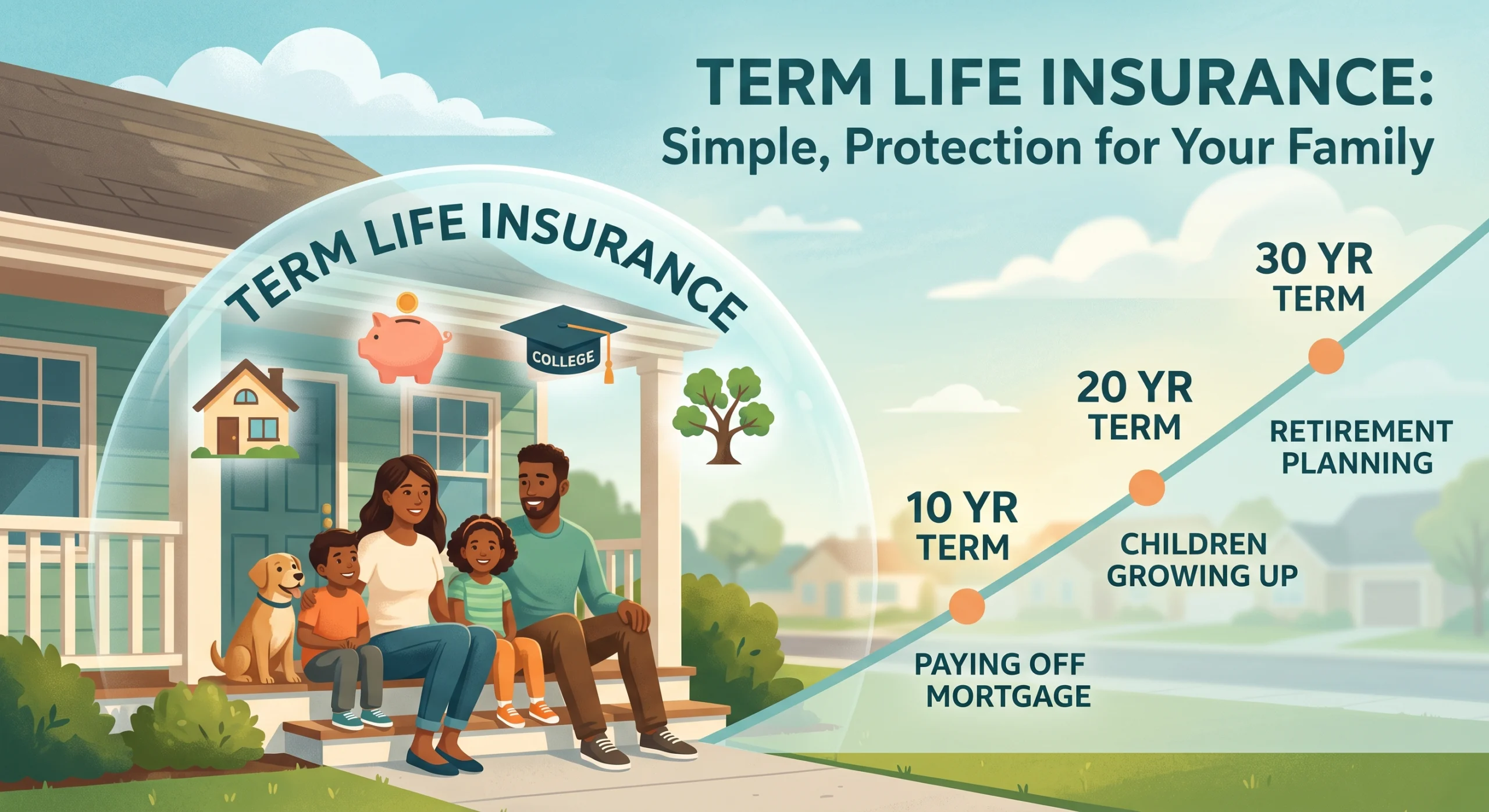
Start with two numbers: what you still owe, and how many years are left on the loan. Buy a level term policy that covers the balance, for a term that outlasts the payoff date.
Round up rather than down. The remaining balance is the floor, not the target. Paying off a mortgage does not cover final expenses, the income gap in the years that follow, or the cost of raising kids on one paycheck instead of two. Most families are better served adding income replacement on top of the loan balance and buying it all in one policy.
This is not the coverage your lender offered at closing
If you have bought a home in the last few years, you have probably gotten the mailer — or the pitch at the closing table — for “mortgage protection insurance.” It sounds like the same product. It is not.
| Lender mortgage protection | Level term life | |
|---|---|---|
| Who gets paid | The lender, directly | Your family, as named beneficiary |
| Benefit over time | Typically shrinks as the balance drops | Stays level for the entire term |
| Premium | Usually stays flat while coverage falls | Locked in for the entire term |
| How the money can be used | Only to retire that one loan | Anything — mortgage, childcare, tuition, income |
| If you refinance or move | Tied to the loan; generally ends with it | Yours to keep, unchanged |
| Underwriting | Often simplified, and priced for it | Fully underwritten — usually cheaper for healthy applicants |
The flexibility is the real advantage. A lump sum paid to your spouse lets them decide: retire the mortgage outright, keep a low-rate loan in place and invest the difference, or hold the money while they figure out what the next few years look like. Coverage that pays the bank makes that decision for them.
Four things people overlook
A note for Florida homeowners
Florida’s homestead protections are among the strongest in the country, but they are often misunderstood. Homestead shields your equity from most creditors — it does not pay your mortgage. A lender holding a recorded mortgage can still foreclose if the payments stop, homestead or not.
It is also worth sizing the policy against what it actually costs to keep a home here, not just principal and interest. Between property insurance, flood where it applies, and taxes, the true carrying cost of a Jacksonville home is meaningfully higher than the loan payment alone. Build that into the number.
It will never be cheaper than it is today
Term life is priced on two things you cannot reverse: your age and your health. Every year you wait, the same policy costs more. And a single new diagnosis can change what is available to you at any price — which is why “I’ll get to it after the physical” is one of the most expensive sentences in this business.
As an independent agency, we are not tied to one carrier. We can put your numbers in front of several and show you what the actual difference is. It is usually a fifteen-minute conversation, and the monthly cost surprises people in the right direction.
Frye Insurance Agency is an independent agency in Jacksonville, Florida. This article is general information about how term life coverage is commonly structured — it is not a recommendation on a specific policy. Coverage, exclusions, and pricing vary by carrier and by applicant.