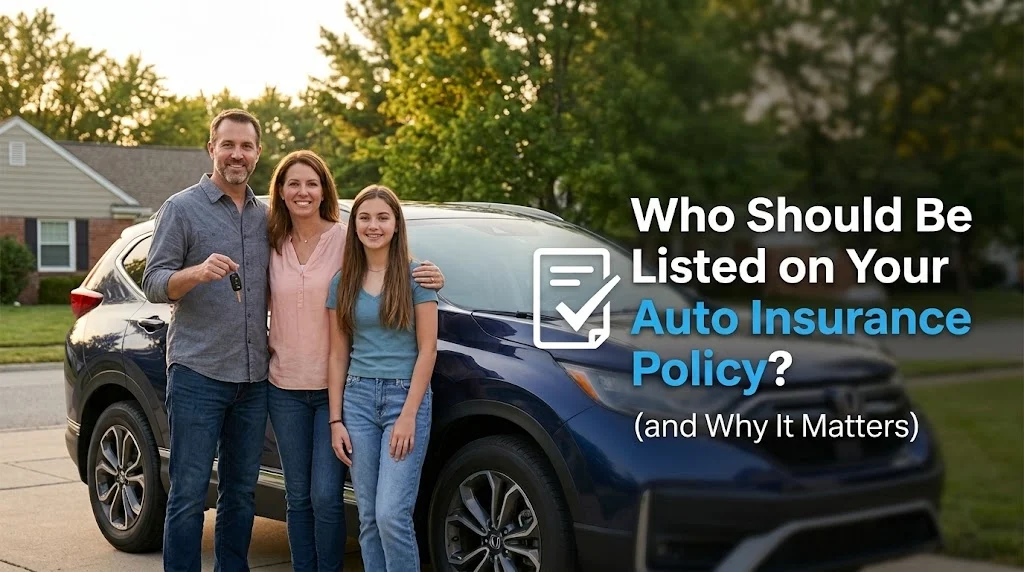
Most people set up their auto insurance once, list themselves, and never think about it again. Then a spouse moves in, a teenager gets a license, or a roommate starts borrowing the car every week — and the policy never gets updated. It feels harmless. In reality, who is (and isn’t) listed on your policy is one of the most common reasons a claim gets reduced or denied outright.
The confusion usually starts with a simple question: does car insurance follow the car or the driver? The answer shapes who needs to be on your policy, who can borrow your car safely, and where you could be left exposed. Here’s how it actually works — and exactly who belongs on your auto policy in Florida.
Does Insurance Follow the Car or the Driver?
In most situations, car insurance follows the vehicle. That means the coverage is tied to the car itself, and it typically extends to whoever is driving it with your permission — not just the person named on the policy. If you hand your keys to a friend for a quick trip to the store and they get into a fender bender, your policy is generally the one that responds, up to your limits.
The driver’s own insurance usually comes into play as secondary coverage — for example, if the damages exceed your limits. But the starting point is almost always the policy on the car being driven. That’s why it matters so much who is attached to your policy and who is allowed to use your car.
Permissive Use: Lending Your Car the Right Way
When you let someone borrow your car, that’s known as permissive use. Because coverage follows the vehicle, your policy generally covers a permitted driver — a friend, a visiting relative, a coworker — the same way it would cover you. This is the everyday flexibility that makes it possible to say “sure, take my car” without a second thought.
The key word is occasional. Permissive use is designed for the once-in-a-while borrower, not the person who drives your car several times a week. Once someone crosses from “occasional favor” into “regular driver,” insurers expect them to be listed on the policy — and that’s where a lot of coverage gaps get created.
Who Should Actually Be Listed on Your Policy
As a rule of thumb, list anyone who lives with you and is old enough to drive, plus anyone outside your household who uses your vehicle on a regular basis. When in doubt, tell your agent — it’s always better to disclose a driver than to guess. Here’s who typically needs to be on the policy:
When Coverage Might NOT Apply
Permissive use is generous, but it isn’t unlimited. There are specific situations where your insurer can refuse to pay — and most of them trace back to who was driving and whether they should have been on the policy. Watch out for these gaps:
What It Means to Exclude a Driver
Sometimes it makes sense to exclude a driver rather than list them. If a household member has a poor driving record that would push your premium sky-high — and they truly never drive your vehicles — some carriers let you formally name them as an excluded driver. That keeps your rate down by confirming they won’t be covered.
The trade-off is absolute: if an excluded driver ever gets behind the wheel and has an accident, there is no coverage for that loss. It can be the right move in the right situation, but it’s a decision to make deliberately with your agent — not by accident, and not as a way to hide a driver who really does use the car.
What About Someone Who Doesn’t Own a Car?
Not everyone who needs coverage owns a vehicle. If you regularly borrow or rent cars but don’t own one yourself, a non-owner auto policy can provide liability coverage while you drive someone else’s vehicle. It’s a common fit for people between cars, frequent renters, or a household member who needs to maintain continuous coverage.
Keep in mind what a non-owner policy does not do: it provides liability protection, but it won’t pay to repair the borrowed vehicle itself. For that, the coverage still comes back to the policy on the car being driven — which is exactly why listing the right drivers on the right vehicles matters so much.
Why Getting the List Right Matters in Florida
Accurately listing your drivers isn’t just paperwork — it protects the claim you’re paying premiums to have honored. Here’s what’s at stake when the driver list is wrong:
Is Everyone Who Drives Your Car Actually Covered?
Let’s Make Sure.
A new driver in the house, a roommate borrowing the car, a teen with a fresh license — any of these can quietly open a gap in your coverage. The team at Frye Insurance can review who’s on your auto policy, confirm every regular driver is properly listed, and make sure you’re not one claim away from an expensive surprise. It’s a quick, no-pressure conversation that could save you thousands.
This article is for general informational purposes and is not insurance or legal advice, nor a guarantee of coverage.
Florida insurance laws, policy terms, limits, and exclusions can change and vary by carrier. Contact Frye Insurance for guidance specific to your situation.