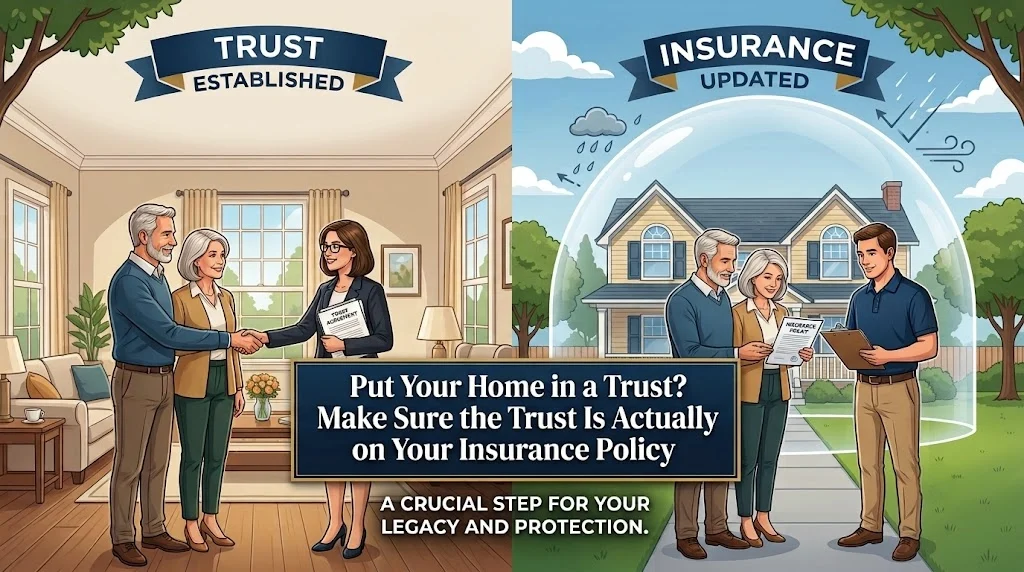
Moving your home into a revocable living trust is one of the smartest estate-planning moves a Florida homeowner can make. It keeps your house out of probate, simplifies how your property passes to your family, and can save your loved ones months of court time and legal expense. But there’s a step that gets missed all the time — and it’s the kind of oversight you don’t discover until you file a claim, which is the worst possible moment to find out.
When you deed your home into a trust, the legal owner of the property changes from you personally to the trust. If your homeowners policy still lists only your name, your deed and your insurance no longer match. That mismatch is exactly what a carrier can point to when it wants to delay, reduce, or deny a claim. Here’s what every homeowner with a trust needs to know — and the simple fix.
Why This Is a Bigger Deal Than It Sounds
This isn’t a paperwork technicality — it goes to the heart of how an insurance policy works. Two problems show up when a trust owns the home but isn’t on the policy.
1. Insurable interest. To collect on a property claim, you have to have a financial stake in the property being insured. Once title transfers to the trust, the trust is the owner — and a carrier can take the position that you, as an individual, no longer hold the insurable interest the policy was written on. That’s the opening an adjuster needs to deny or short-pay a loss.
2. A trust is a “what,” not a “who.” Standard homeowners policies define who’s covered as “you and residents of your household who are your relatives.” That language was written for people, not legal entities. A trust doesn’t automatically fall inside that definition, so it can’t just be assumed onto the policy — it has to be added the right way, in writing.
This isn’t hypothetical. Consumer-advocacy group United Policyholders documented homeowners who lost their homes in wildfires and then hit a wall trying to rebuild — because the trust that owned the home was never added to the insurance policy. Some ended up paying attorneys to fight denials that a five-minute phone call could have prevented.
The Fix: Name Both You and the Trust
The goal is simple — your policy should reflect exactly how your home is owned and keep protecting the people who actually live there. That means naming both. Here’s the checklist we walk our clients through:
One Mistake to Avoid: Don’t Make the Trust the ONLY Name
When homeowners hear “the trust needs to be on the policy,” some overcorrect and ask to have the trust listed as the sole named insured, dropping their own names off entirely. That swaps one problem for another.
What Florida Homeowners Should Know
A few things specific to Florida are worth keeping on your radar:
Own Rental or Business Property in an LLC or Trust? Same Rule Applies
This isn’t just a homeowners issue. Real estate investors and business owners routinely hold rental homes, commercial buildings, and other property in an LLC, a land trust, or a business trust for liability and tax reasons. The exact same trap is waiting: if the entity owns the building but the policy names an individual — or vice versa — you’ve got a title-versus-policy mismatch that a carrier can use to fight a claim.
On the commercial side the fix is the same in spirit: the policy’s named insured needs to match the entity that actually holds title, with any related individuals or operating companies added appropriately. If you’ve moved property into a new LLC or trust recently and haven’t updated the insurance, that’s worth a call before your next loss — not after.
Just Put Your Home in a Trust? Let’s Make Sure Your Policy Caught Up
If you’ve moved your home — or any property — into a trust or an LLC, take five minutes to make sure your insurance reflects it. The team at Frye Insurance will review how your property is titled, confirm the trust is named correctly on every policy that touches it, and coordinate with your estate plan so there are no surprises when it matters most. It’s quick, it’s usually free, and it’s a whole lot easier than fighting a denied claim.
This article is for general informational purposes and is not legal, tax, or insurance advice, nor a guarantee of coverage. Policy terms, endorsements, and carrier requirements vary. Consult your estate-planning attorney and contact Frye Insurance for guidance specific to your property and situation.